What are specs?
Specs or specifications are structured artifacts that formalize the development process for features and bug fixes in your application. They provide a systematic approach to transform high-level ideas into detailed implementation plans with clear tracking and accountability.
With Kiro's specs, you can:
- Break down requirements into user stories with acceptance criteria
- Build design docs with sequence diagrams and architecture plans
- Track implementation progress across discrete tasks
- Collaborate effectively between product and engineering teams
Core Structure
Every spec generates three key files that form the foundation of your specification:
- requirements.md (or bugfix.md) - Captures user stories, acceptance criteria, or bug analysis in structured notation
- design.md - Documents technical architecture, sequence diagrams, and implementation considerations
- tasks.md - Provides a detailed implementation plan with discrete, trackable tasks
Loading diagram...
Three-Phase Workflow
All specs follow a three-phase workflow that transforms your idea into executable implementation:
Requirements or Bug Analysis - Define what needs to be built or fixed
- Feature Specs: User stories and acceptance criteria in
requirements.md - Bugfix Specs: Bug analysis with current/expected/unchanged behavior in
bugfix.md
Design - Create technical architecture and implementation approach in design.md
- System architecture and component design
- Sequence diagrams and data flow
- Error handling and testing strategy
Tasks - Generate discrete, executable implementation tasks in tasks.md
- Trackable tasks with clear outcomes
- Real-time status updates as you implement
- Run tasks individually or all at once
Task Execution
Kiro provides a task execution interface for tasks.md files that displays real-time status updates. Tasks are updated as in-progress or completed, allowing you to efficiently track implementation progress and maintain an up-to-date view of your development status.
Loading image...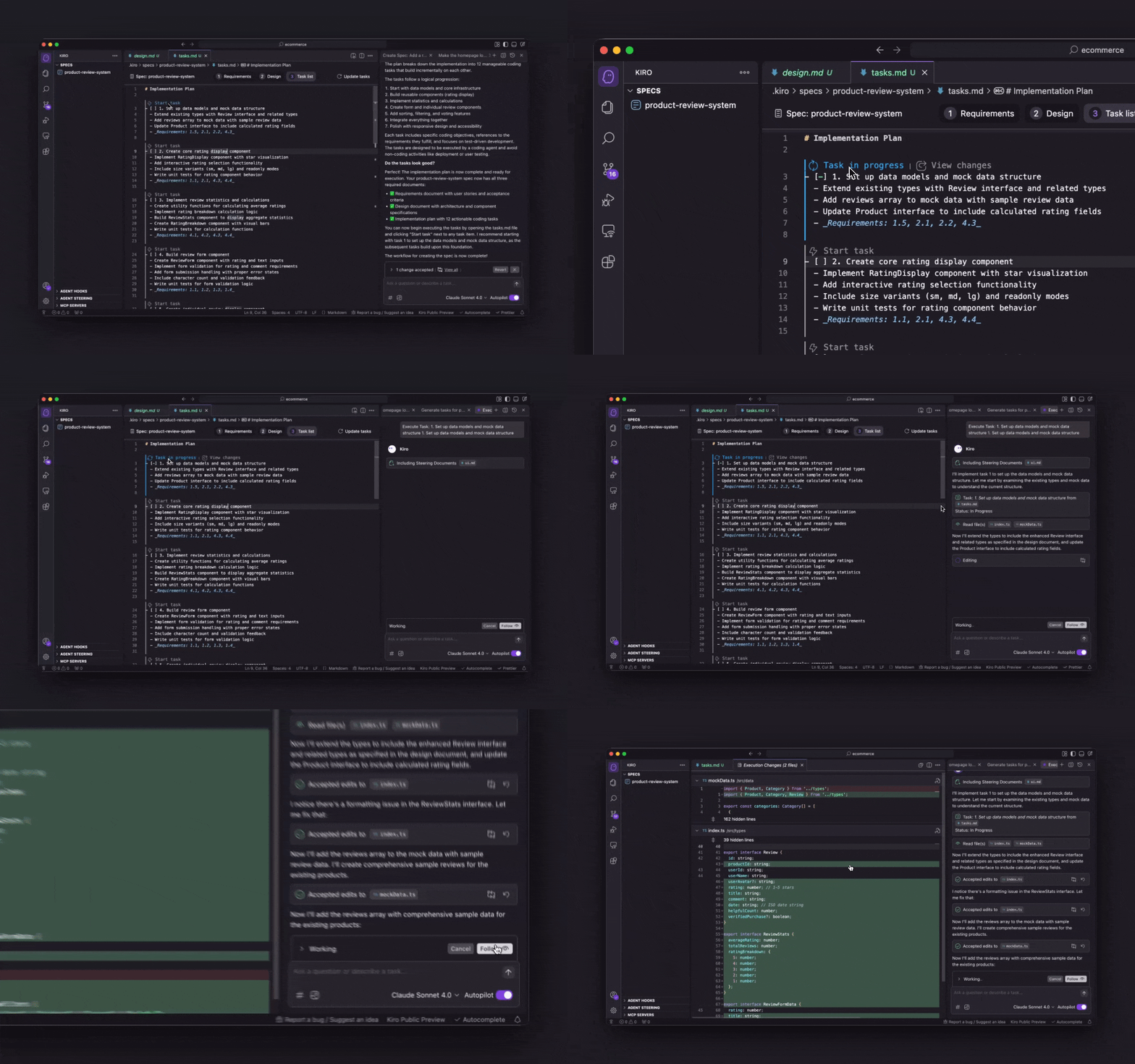
Types of Specs
Kiro supports two types of specs to match your development needs:
Feature Specs
For building new features and capabilities in your application. Feature Specs guide you through requirements gathering, technical design, and implementation planning with two workflow variants: Requirements-First and Design-First.
Learn more about Feature Specs →
Bugfix Specs
For systematically diagnosing and fixing bugs with surgical precision while preventing regressions. Bugfix Specs help you identify root causes, design fixes, and validate that nothing else breaks.
Learn more about Bugfix Specs →
Getting Started
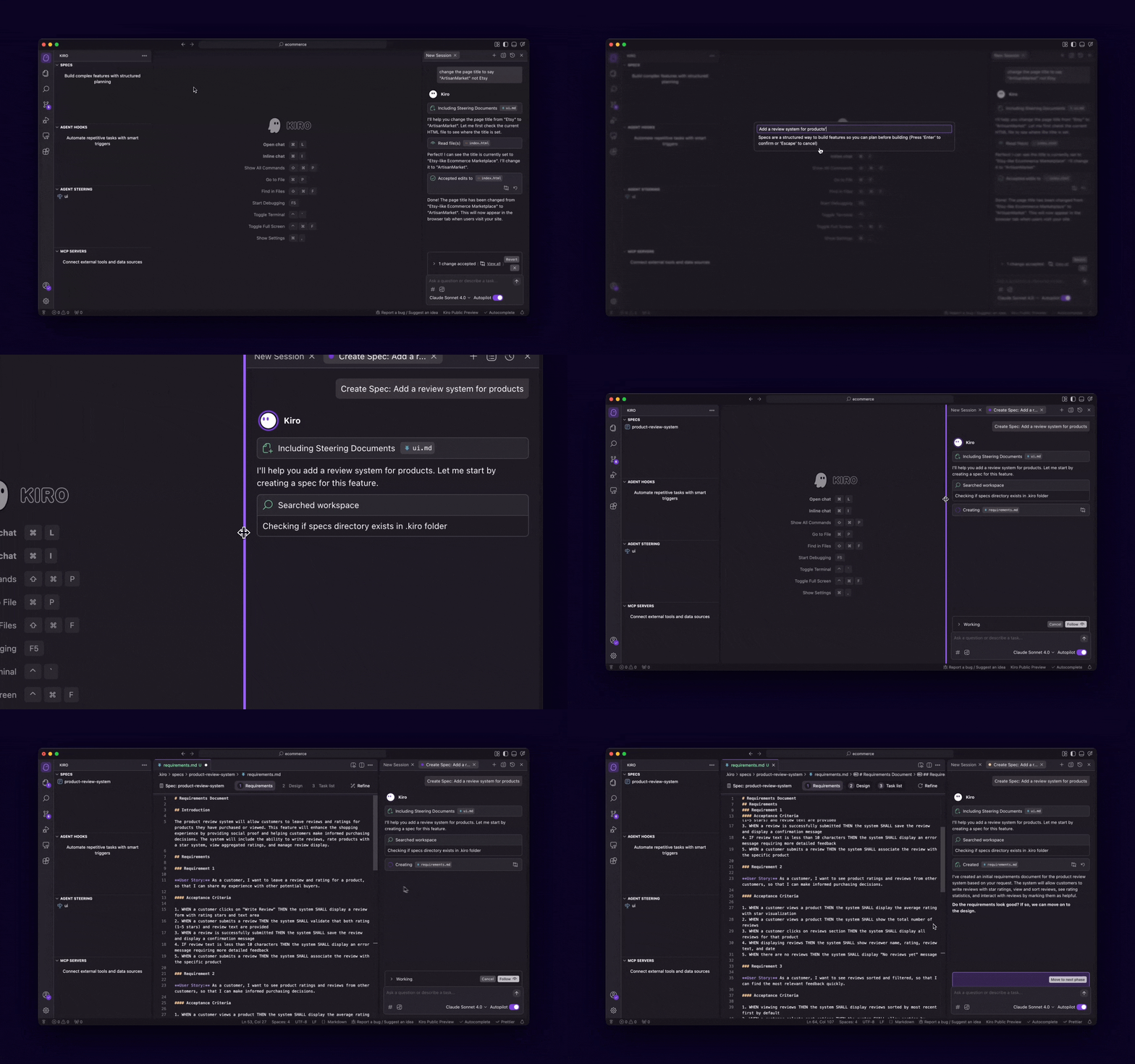
Ready to create your first Spec? Here's how:
- From the Kiro pane, click the
+button under Specs. Alternatively, choose Spec from the chat pane. - Kiro will ask if you are developing a Feature or fixing a Bug
- If you choose Feature, describe your feature and choose your workflow: Requirements-First or Design-First
- If you choose Bug, describe your bug
- Follow the workflow through each phase to implementation
When to Use Specs vs Vibe
Use Specs when:
- Building complex features requiring structured planning
- Fixing bugs where regressions are costly
- You need documentation for team collaboration
- Requirements or design need iteration
Use Vibe when:
- Quick exploratory coding
- Prototyping without clear goals
Learn more
Dive deeper into Kiro's Spec system with these guides:
Page updated: February 18, 2026
Specs