Nissan scaled AI-native engineering from pilot to 34 use cases in months
Summary
A global automotive R&D center turned specification-driven AI development into a repeatable framework—generating over $1M in business value while reclaiming 1,500 hours of engineering time annually.

Nissan Technical Center North America (NTCNA) is the research and development division of Nissan North America, responsible for innovation in vehicle engineering, software development, digital engineering, data analytics, and AI-assisted engineering practices supporting the development of Nissan and INFINITI vehicles.
Industry
Automotive
Organization type
Enterprise
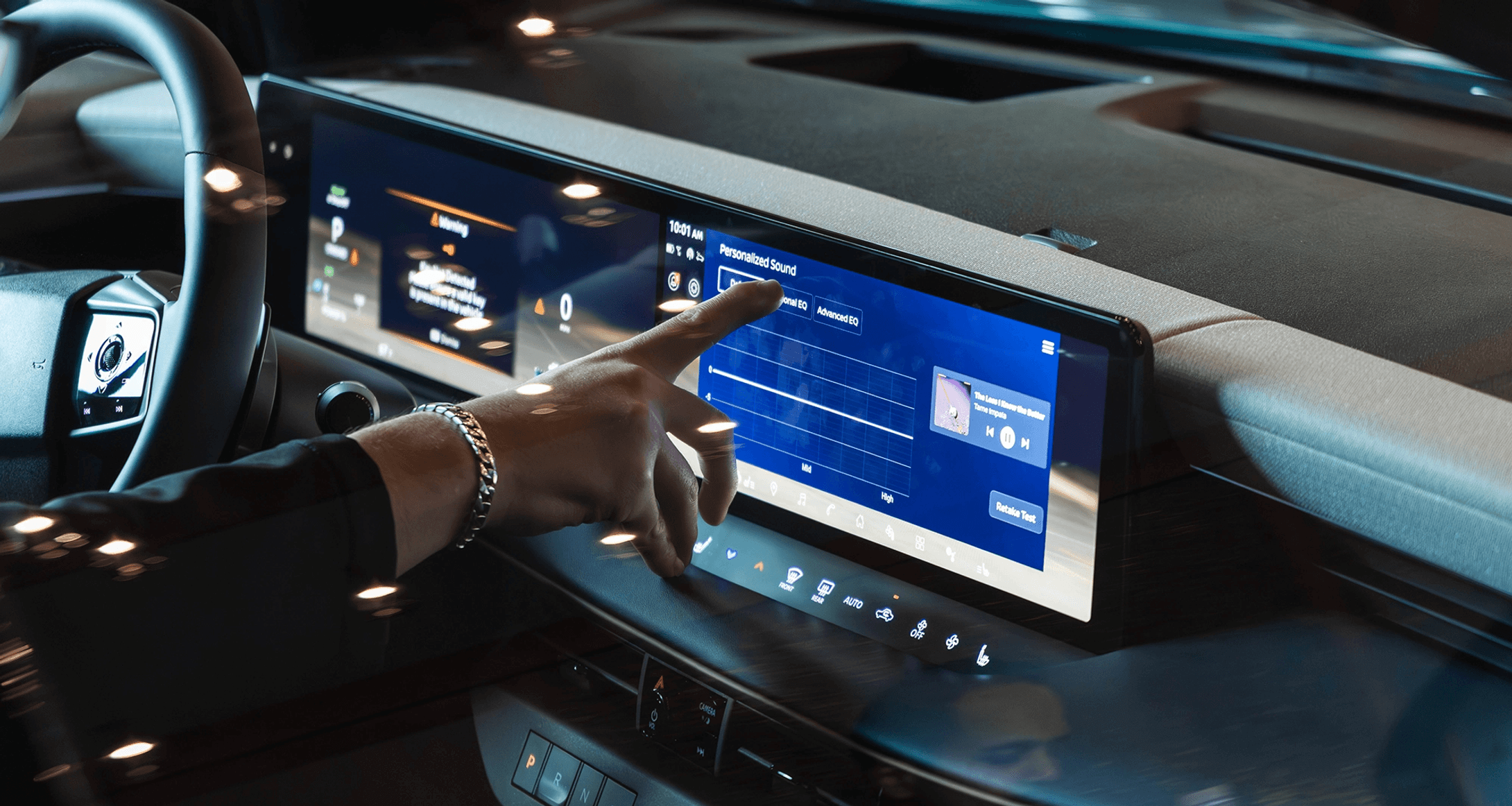
Modern vehicles contain millions of lines of code. Safety-critical ECU firmware, cloud-connected services, analytics platforms: the software that runs inside a car today rivals the complexity of enterprise systems that took decades to build. For Nissan Technical Center North America, the R&D division of Nissan North America, software content and complexity continued to grow across vehicle platforms, there was a need to find new ways to help engineers work more efficiently while maintaining quality and governance.
Before writing a single line of code, engineers worked across multiple repositories, and coding standards that required significant context gathering before development could begin. Requirements captured in design documents needed manual interpretation and project setup activities before development could start. New engineers joining projects faced weeks of onboarding just to internalize codebase conventions and architectural patterns. Supporting a globally connected development organization spanning the United States, Mexico, Japan, India, and other regions, teams work together to deliver a wide range of software platforms and enterprise solutions. Given the size and complexity of this ecosystem, even small efficiency gains per developer can scale into substantial productivity improvements across the organization.
The team needed a way to accelerate delivery without sacrificing engineering rigor. In automotive software, quality and accuracy remain foundational expectations.
1,500+
hours saved annually across engineering functions
$1M+
in business value generated from initial rollout
34
documented use cases
25+
internal tools, automations, and workflow accelerators created
70
pilot users spanning multiple engineering functions
11
engineering functions in initial rollout
Finding the right tool for an engineering culture
In early 2026, NTCNA evaluated multiple AI coding assistants. The team had seen what generative AI could do for simple autocomplete. That was not what they were after. They asked a different question: Can AI help our engineers build the right code from specifications, while enforcing our standards automatically, with the enterprise governance we need at scale?
What set Kiro apart was a combination of three factors that mapped directly to how NTCNA already worked.
- Spec-driven development, the ability to define requirements in structured feature files and use steering documents to encode organizational standards: This resonated with an engineering culture where traceability is table stakes.
- Enterprise controls and data security, with centralized governance giving full visibility into usage, adoption patterns, and compliance: For a global automotive company managing sensitive intellectual property, this was non-negotiable.
- Predictable cost combined with enterprise governance, security and visibility provided the confidence needed to support broader adoption of AI-assisted development.
Kiro's capabilities for usage transparency, auditability, model management, integration oversight and contextual guidance helped demonstrate a scalable approach aligned with Nissan's requirements. Together with the Kiro team, Nissan established the foundation for expanding AI-powered development in a responsible, secure and cost-conscious manner.
A deliberate rollout, not a rushed one
NTCNA followed a phased approach, validating results before expanding.
The pilot launched with 70 users representing multiple engineering functions, including vehicle design, testing, validation, software development, analytics, and engineering administration. Engineers worked through real scenarios from their own codebases during hands-on training sessions and weekly Office Hours with the Kiro team. Those sessions created a continuous feedback loop: engineers brought daily challenges and collaboratively translated them into effective Kiro workflows, building muscle memory rather than just tool familiarity.
The objective was not simply to evaluate AI-generated code. It was to determine where AI-assisted development could accelerate engineering workflows without compromising quality, governance, or security.
As engineers gained confidence, adoption expanded rapidly beyond traditional software development. Teams applied Kiro to:
- Automate CAD rendering workflows
- Modernize MATLAB and Python analysis tools
- Accelerate vehicle test automation
- Build internal analytics platforms
- Automate configuration management
- Create AI-powered engineering knowledge assistants
- Streamline data processing across vehicle development programs
Pilot participants became Kiro ambassadors, driving awareness, adoption, and best-practice sharing across Nissan entities. The success of the North American pilot was quickly leveraged across the global organization, enabling other teams to benefit from NTCNA's experience and proven approaches.
Spec-driven development in practice
At the core of NTCNA’s workflow is specification-first coding. An engineer writes a structured .feature file describing expected behavior. Kiro generates implementation code and corresponding test cases directly from the defined behavior and scenarios. Code reviewers can then focus on business logic, edge cases, and safety considerations rather than stylistic and structural issues.
Steering documents encode NTCNA’s coding standards, architectural patterns, and naming conventions. When Kiro generates or suggests code, it references these guardrails automatically:
- Consistent naming conventions across the entire development team
- Standardized error handling patterns
- Pre-approved security patterns for authentication and authorization
- Auto-generated documentation matching organizational standards
The team developed custom integrations that connected Kiro with approved engineering tools and data sources. Engineers could leverage relevant context directly within their workflows, reducing manual effort and accelerating engineering activities while maintaining established review and governance practices. By describing requirements in natural language, engineers could generate code, test assets, and workflow components aligned with established engineering standards. For example, an engineer might request a test case from an engineering requirement or generate validation logic from a software requirement, allowing teams to move more quickly from concept to implementation. Rather than manually gathering information from multiple systems or creating repetitive code from scratch, engineers were able to use AI-assisted development to accelerate delivery while maintaining quality, consistency, and engineering rigor.
Note: AI-generated code is always reviewed by qualified engineers before deployment. For safety-critical vehicle systems, NTCNA maintains rigorous human-in-the-loop review processes.
What the numbers show
Within months, the initiative generated over 1,500 hours in annual time savings, more than $100,000 in initial cost avoidance, and over $1M in business value from the initial rollout alone.
Two projects illustrate the scale of impact.
Project 1: vehicle test data pipeline
Engineers built an internal vehicle test data pipeline capable of extracting CAN log data, enriching it with engineering metadata, and preparing it for analytics and machine learning applications. The solution was delivered in two days, avoiding approximately $12,000 in development cost while providing a scalable foundation for future analytics work.
Project 2: legacy drive data processing modernization
A legacy Excel/VBA-based drive data processing workflow was modernized into a Python-based application with integrated quality validation, expanded powertrain support, and simplified deployment. The solution reduced processing effort by approximately 10x and saves an estimated 150 hours annually; delivering approximately $1M in annual productivity value.
How the work changed
The shift extended beyond raw speed. Engineers began using Kiro to modernize legacy workflows, rapidly prototype solutions, and reduce dependence on external packages where appropriate.
For years, my software development teams relied on third-party libraries because building and maintaining those capabilities ourselves simply wasn't practical from a cost and timing perspective. AI is changing that reality. Today, my team of engineers can create lightweight internal frameworks, rapidly prototype solutions, and reduce our dependence on external packages where it makes sense. This gives us greater ownership of our technology, better control over quality, and more flexibility to tailor solutions to Nissan's specific needs. The result is a greater engineering agility and ownership of critical workflows, less technical debt, and a stronger engineering organization that owns more of the software that matters most.
By mid-year, engineers had documented 34 use cases and created more than 25 internal tools, automations, assistants, and workflow accelerators. Several teams developed custom MCP-based integrations, extending Kiro into proprietary engineering systems and specialized automotive workflows.
A repeatable framework, not a one-off win
NTCNA’s success was not based on any single project. The organization established a repeatable adoption model built on:
- Enterprise governance and security controls
- Structured training and onboarding
- Specification-driven development practices
- Steering documents and reusable organizational standards
- MCP-enabled integrations for domain-specific workflows
- Community sharing of successful use cases
This framework enabled knowledge to scale beyond individual teams and created a foundation for broader engineering adoption. The momentum is now expanding globally, with other Nissan regions evaluating adoption based on NTCNA’s playbook.
What comes next
The team is exploring deeper integration across the engineering organization:
- Agentic architectures and multi-agent orchestration for complex vehicle software workflows
- CI/CD pipeline integration through Kiro Headless mode
- Purpose-built agents for regulatory compliance documentation and test generation
- An expanded MCP ecosystem connecting AI agents to approved engineering platforms and knowledge repositories
For NTCNA, the question is no longer “Should we use AI in development?” It is “How can we continue expanding AI-assisted engineering where it delivers the greatest value?”
Get started with Kiro
The workflow matters, not just the tool. Start building with specs.
Credits
- Carrie Dubay — Sr. Manager Engineering R&D, Nissan
Kiroautomotive
Get started with AI-native development