Rehrig compressed software development from three years to seven weeks
Summary
A 113-year-old, third-generation family-owned manufacturer with 35 developers compressed years of planned software development into weeks, rewriting what a small engineering team can build. 8 production-ready outcomes were delivered in 2 days.

Industry
Manufacturing
Organization type
Enterprise
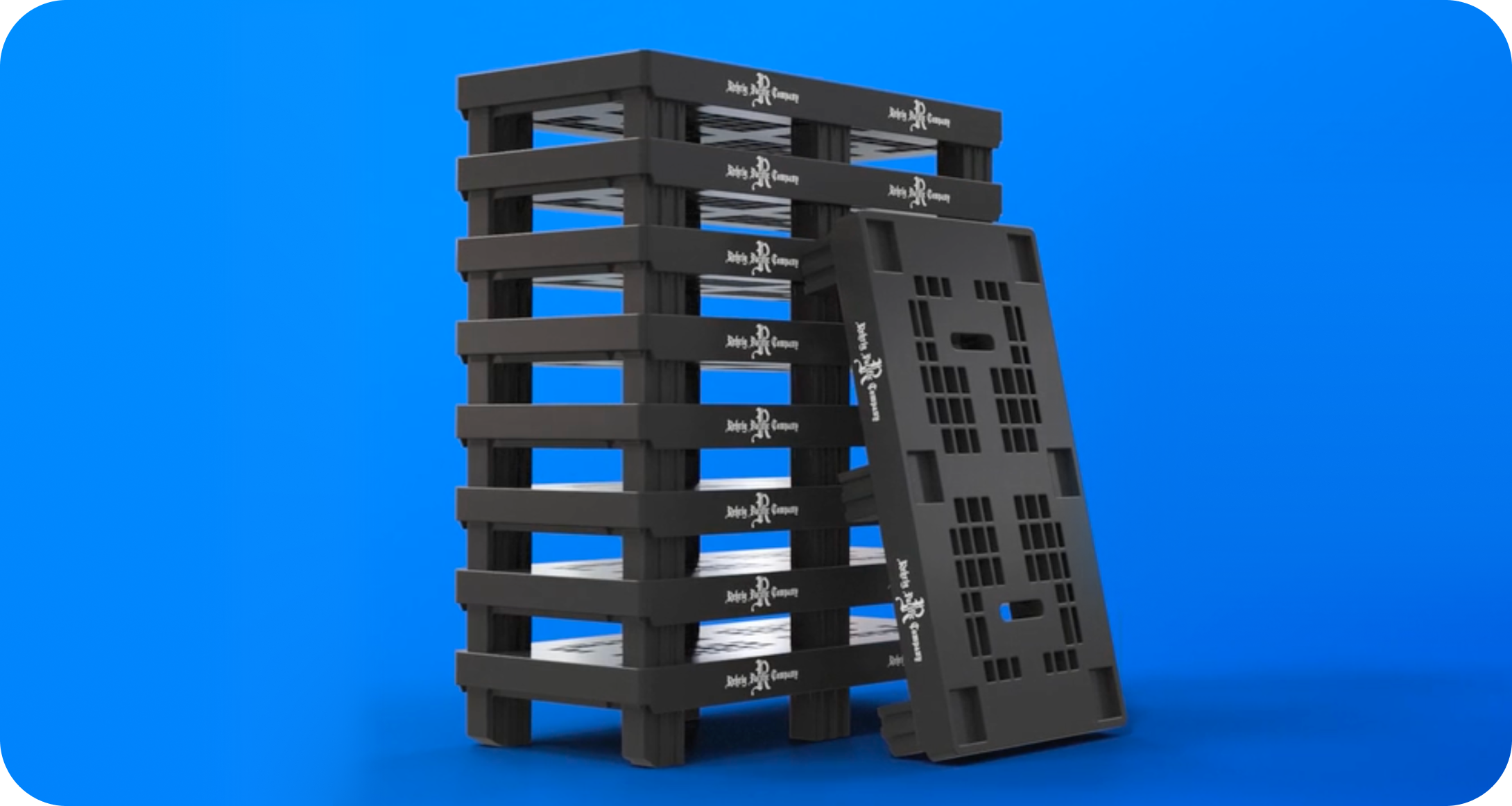
Rehrig Pacific Company’s pallets, totes, and material handling equipment move goods through the supply chains of major retailers and grocers across North America. For 113 years, the company has operated with a manufacturing mindset: challenge assumptions, understand root cause, align on it, then develop countermeasures. That discipline runs through everything, from the factory floor to the IT organization, all in service of the greater mission: to celebrate their people and empower them to create innovative solutions that effectively and responsibly move goods, resources, and ideas.
So, when Rehrig Pacific’s leadership set the direction in December 2025 that artificial intelligence would become a centerpiece of the company’s growth strategy, the 35-person development team didn’t chase the latest trend. They went looking for something that matched how they already think.
The team had evaluated a broad array of agentic AI tools over that period, and nothing stuck. Some were too immature. Others were too narrowly scoped to make real progress on production systems. There was enthusiasm across the organization, but no acceleration.
Then the team found Kiro.
Spec-driven, not vibe-driven
The team made a deliberate philosophical choice early. Vibe coding (the rapid generation of code without structured intent) was not the path for production systems. Instead, Rehrig Pacific committed to spec-driven development: deep thinking upfront, requirements crystallized into specification files before a single line of code gets generated.
This was not an arbitrary preference. It aligned precisely with how Rehrig Pacific’s engineering culture already worked, rooted in the A3 problem-solving methodology common in manufacturing. Challenge assumptions. Identify root cause. Align. Then build.
Kiro’s spec workflow fit that culture like it was designed for it.
The team’s architect authored an implementation document defining a custom AI-native development methodology specific to Rehrig Pacific. That document codified six phases per feature, from requirements discovery through design, implementation, code review, QA, and CI/CD. It defined seven formal roles, with Kiro listed explicitly as a participant alongside product owners, architects, developers, and QA engineers.
Six categories of steering documents now encode Rehrig Pacific’s organizational standards into every AI-generated output: coding practices, AWS infrastructure patterns, API design, data architecture, frameworks, and deployment. These documents serve as the operating context that helps ensure Kiro’s output meets Rehrig’s standards without requiring engineers to explain conventions on every prompt.
Production work is driven through the spec process to get good, scalable outcomes. Kiro provided Rehrig Pacific with the structured, deep-thinking approach their engineering culture demands.
Rehrig One: the proof point
The real test came with Rehrig One, the company’s top technology priority: a unified platform bringing together its salespeople, automating the quote-to-cash process, and giving customers self-service access to their data. Every prior evaluation of off-the-shelf solutions had come back the same way: 60 percent of what they needed. Not close enough to justify the investment, but too expensive to build from scratch with a small team.
Rehrig One represented two separate initiatives that had each been independently scoped as multi-year efforts. The first targeted the back-office quote-to-cash process, systemizing and automating critical handoffs between sales and order processing. The second was a customer-facing experience platform for self-service data access and support interactions. Together, the original plan called for two to three years of phased development to reach a functional prototype.
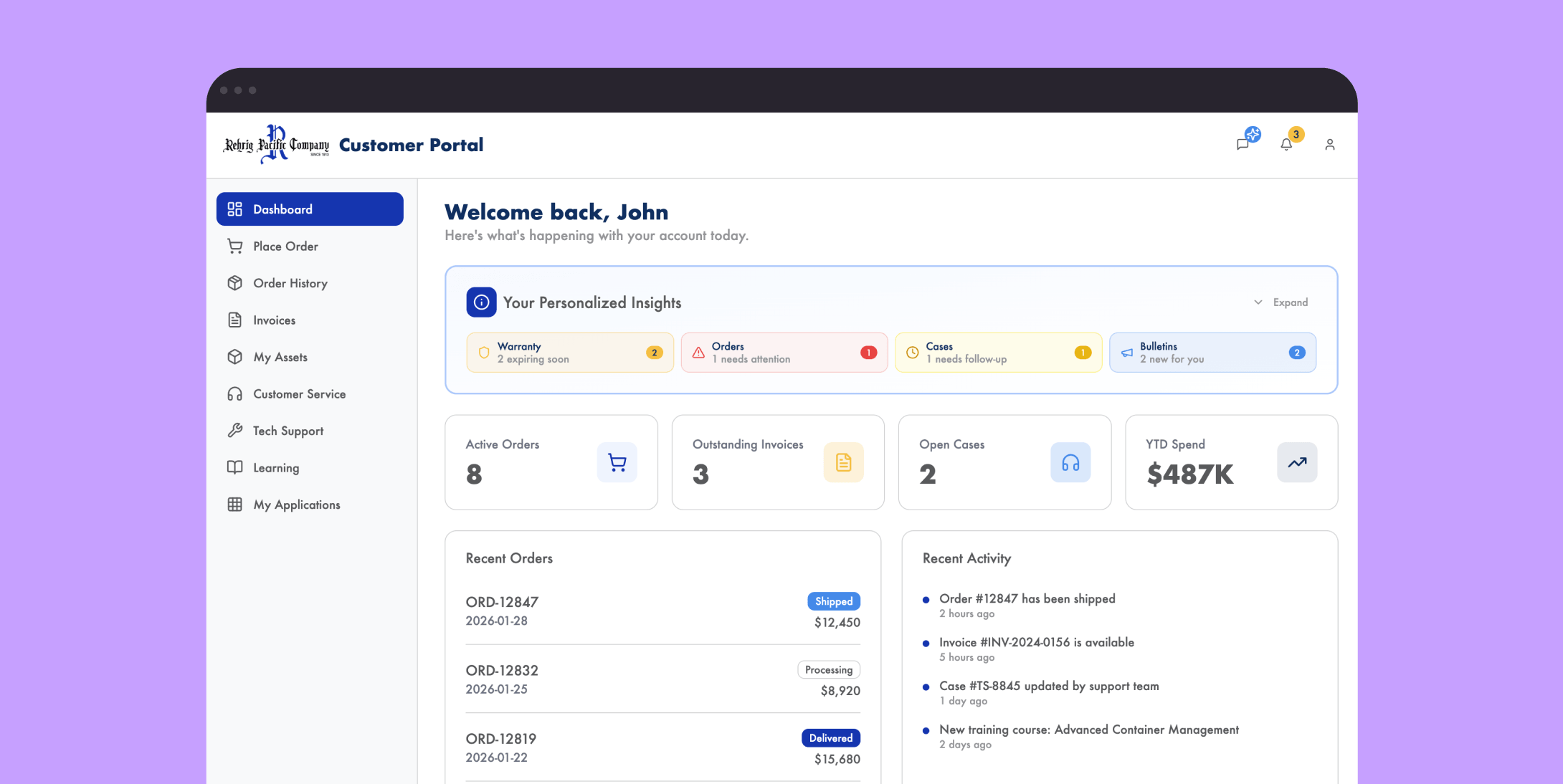
In January 2026, Rehrig Pacific brought 30 developers together to explore a number of use cases including an MVP for Rehrig One, using Kiro. Those developers delivered eight production-ready outcomes in 48 hours, work the company estimated would have taken five to eight sprints under their prior process.
The executives who had been debating build versus buy had their answer.
By the end of May, Rehrig Pacific had delivered the first of 6 modules for a functional MVP that extended past the scope of the original prototype plan. The prototype that was supposed to take three years to reach was in the hands of users in less than two months. Brian Rowe, VP of Technology at Rehrig, put it plainly: the team delivered work expected to take roughly three years in the last seven weeks with a single developer, and they were already working to expand the impact and velocity for the rest of their resources.
We have so far delivered work that we expected to take roughly 3 years in the last 7 weeks with a single developer and are expanding the impact and velocity for the rest of our resources.
How the work changed
The shift Rehrig Pacific’s team experienced was not simply about raw speed. It was about where their attention goes.
Before adopting the AI-native development methodology, the team operated under traditional Agile sprint-driven methods. Product owners defined and refined user stories. Sprint ceremonies consumed significant coordination time. A three-person development team moved from idea to value creation over months, structurally bound by the number of hands available.
Now, developers spend the majority of their time on architecture, system design, and prompt refinement. They coach Kiro through edge cases, troubleshoot the places where generated code needs adjustment, and contribute to an expanding library of steering documents that improve over time through peer collaboration. The mechanical work (boilerplate, test scaffolding, repetitive implementation patterns) has been largely automated.
The change extended beyond the engineering team. Non-technical staff found a productive role in the front end of the process: capturing unstructured product thinking, feeding it to Kiro, and letting the tool structure and refine it into workable requirements. Product managers began using Kiro’s Figma integration for rapid prototyping, moving past aesthetic mockups to interactive prototypes that define requirements with enough precision to bring back to Kiro for a refined specification pass.
The team created 84 spec files to manage the Rehrig One MVP, replacing the Jira stories that had governed their prior workflows. Some developers found it faster than working through stories, and the team began evaluating whether the repos could contain everything they need without a separate project management layer.
Beyond the flagship
What makes Rehrig Pacific’s adoption notable is not the flagship initiative alone. It is the breadth. In the same seven weeks that Rehrig One went from concept to production MVP, the team launched parallel initiatives across every part of the organization. For example, the team created a performance management system that ties corporate strategy to frontline work, an IT/SecOps visibility platform to eliminate hours of manual metric gathering, and an API-based automation platform that lets engineers build protected automations for lower-tier support teams. Each one began with Kiro and moved faster than anyone had thought possible.
Projects that were unthinkable eighteen months ago (too large, too complex, too resource-intensive for a small IT team) are now routine items on the roadmap. The old constraint of not enough developers to build everything the company needs simply doesn’t come up anymore. The team no longer feels bound to settle. They can deliver exactly the experience they want: what best supports their brand, their employees, and their customers.
We no longer feel bound to settle. We can deliver exactly the experience we want, even if it's a mix of custom and off the shelf. What best supports our brand, our employees, and our customers.
Building at the speed of ambition
Moving at this pace has surfaced an entirely new set of challenges. These are the kind that only exist because the team is now operating at a scale and speed that was previously out of reach.
The team is actively evolving their entire delivery infrastructure: DevSecOps processes, QA approaches, and security review practices designed for the velocity they now sustain. That work is expanding into core engineering standards, branching strategies, pull request guidance, and code review expectations. The norms that served a three-person team are being rebuilt for a 35-person team operating at full velocity.
“We identified rapidly that we would need to rethink our entire delivery process,” Rowe said. “But what we’re building in the process is a far more agile leadership team that is growing accustomed to rapidly identifying those second and third-order impacts, and moving on them.”
The AI-native development methodology currently covers approximately 50 percent of Rehrig Pacific’s active development projects. The team has clear line of sight to migrating all active development into the framework within three to four months. They are also actively working to modernize all legacy applications using Kiro, applying the same spec-driven approach to brownfield scenarios to establish foundational understanding for new development.
Rehrig Pacific has moved from debating feasibility to choosing what to build next—continuing to move goods, resources and ideas on behalf of their customers and communities, delivering customer value at the speed of AI.
Get started with Kiro
The workflow matters, not just the tool. Start building with specs.
Kiromanufacturing
Get started with AI-native development